Apple’s 20th Anniversary iPhone May Finally Break the Mold of Iterative Updates
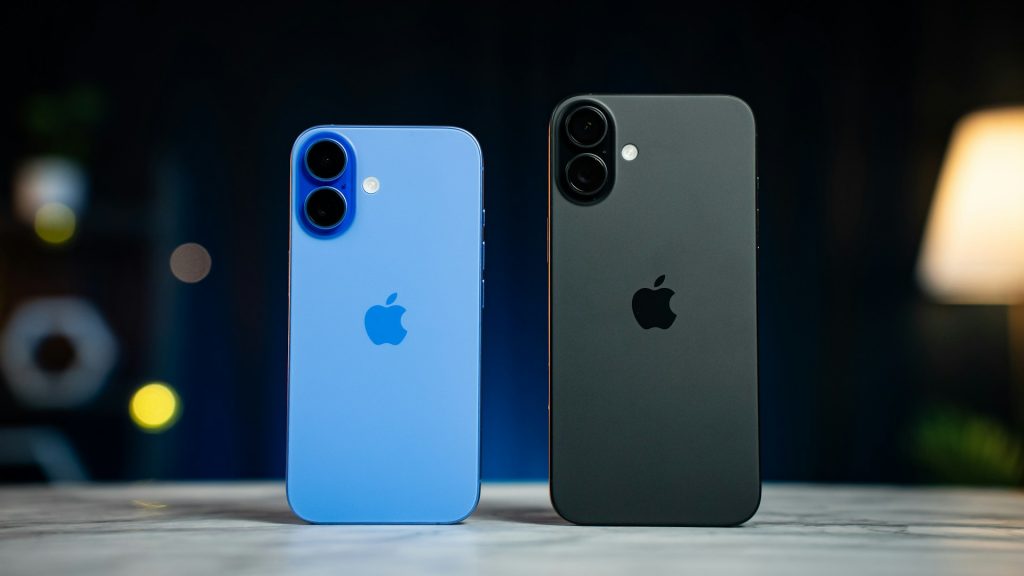
As Apple approaches the 20th anniversary of the original iPhone’s debut, reports suggest the tech giant is preparing a radical redesign for 2027 that could redefine the smartphone landscape just as the iPhone X did a decade earlier. While the current iPhone 17 lineup launched last year and the iPhone 18 is expected later in 2026, industry insiders believe the real revolution is scheduled for the following year. Bloomberg’s Mark Gurman describes the planned device as having an “extraordinarily complex” design, potentially marking the end of the static aesthetic that has defined recent generations.
This upcoming milestone echoes the strategy Apple employed in 2017. The company skipped the “iPhone 9” moniker entirely, launching the iPhone X alongside the iPhone 8 to celebrate the device’s 10th anniversary. That model introduced Face ID and the edge-to-edge screen, setting a design language that persists even in the current iPhone 17 models. Analysts speculate Apple might pull a similar move in 2027, bypassing a standard “iPhone 19” in favor of an “iPhone 20,” “iPhone XX,” or simply “iPhone 2027” to align with its iOS naming conventions.
The Vision of a Button-Less Future
The most persistent rumors surrounding the 20th-anniversary model point toward a “button-less” all-glass chassis. Reports originating from supply chains suggest that traditional physical keys—power, volume, and the newer Action and Camera Control buttons—will be replaced by touch-sensitive areas integrated directly into the frame. These inputs would likely rely on haptic engines to simulate the tactile feel of a click, similar to the Force Touch trackpads found on MacBooks. This technology would allow the device to differentiate between a light tap and a firm press to trigger varying commands.
However, the path to a seamless, all-screen device remains unclear. While some sources claim Apple is targeting a device with zero display cutouts by May 2025, display analyst Ross Young has tempered expectations. He suggests that while Face ID components may move under the display for the 2026 and 2027 models, a truly invisible camera system might not be commercially ready until 2030. It is possible Apple could release a special “Ultra” anniversary edition without a cutout, positioning it above the standard Pro models, which may retain a smaller punch-hole design.
Reflecting on the Era of Incremental Gains
To understand the significance of a potential 2027 overhaul, it is helpful to look back at how Apple has managed its hardware evolution over the last decade. The transition between the iPhone 12 Pro Max and the iPhone 13 Pro Max serves as a prime example of the company’s strategy of refining, rather than reinventing, its premium handsets.
When the iPhone 13 Pro Max launched in September 2021, it arrived less than a year after the 12 Pro Max, yet the physical differences were subtle. The 13 Pro Max was slightly thicker at 0.30 inches compared to the 0.29-inch profile of its predecessor, and it was heavier, weighing 8.47 oz versus the 12 Pro Max’s 8.03 oz. Both shared the same 6.7-inch OLED display with a 2778 x 1284 resolution and the ceramic shield protection. However, the 13 Pro Max introduced a critical display upgrade: a variable refresh rate of 10-120Hz, providing smoother scrolling compared to the fixed 60Hz panel on the 12 Pro Max, though both maintained a peak brightness of 1200 nits.
Battery and Camera Enhancements
Under the hood, the shift from the A14 Bionic to the A15 Bionic chip brought measurable performance gains. GeekBench 6 scores showed the 13 Pro Max hitting 2409 in single-core performance compared to the 12 Pro Max’s 2071. More importantly, Apple addressed power demands by significantly increasing battery capacity. The 13 Pro Max housed a 4352 mAh battery, up from the 3687 mAh cell in the previous model. This hardware change translated to real-world results: battery life estimates for video playback jumped from roughly 8.5 hours on the 12 Pro Max to nearly 19 hours on the newer model.
The camera systems also saw iterative but impactful updates. While both phones featured triple 12 MP setups, the 13 Pro Max utilized larger sensors and wider apertures. Its main camera offered an F1.5 aperture with 1.9 μm pixels, an improvement over the F1.6 aperture and 1.7 μm pixels of the 12 Pro Max. The telephoto lens also extended its reach, moving from a 2.5x optical zoom (65mm) to a 3.0x zoom (77mm), giving users tighter portrait shots and better long-range clarity.
As Apple faces renewed competition from generative AI companies and seeks to define its next decade, the industry is watching closely. The steady refinements seen in the iPhone 12 and 13 eras laid the groundwork for a reliable ecosystem, but the rumors of 2027 suggest the company is once again ready to take a massive leap forward.
 The State of the Galaxy S Lineup
  US More Reliant on EU for Key Imports Than China, New Study Finds, as German Trade Surplus with America Hits a Low
  New Visa Restrictions Proposed for Foreign Students and Journalists
  Google Taps into YouTube Videos to Train Its AI Models Gemini and Veo 3
  Major U.S. Cities Are Sinking — Groundwater Depletion Identified as Key Cause
  Rheinmetall AG: A Global Powerhouse in Defense and Industrial Innovation
  Biotech Sector Watch: Iovance Shares Slide as Phathom Issues Upbeat 2026 Forecast
  Phillips Seeks Career Reset with Championship Move
  Former United Prospect Cut by Hull City as Red Devils Eye Massive Summer Overhaul
  TV Landscape Shifts: Blue Bloods Cast Mourns Cancellation as Fallout Universe Expands in Las Vegas